
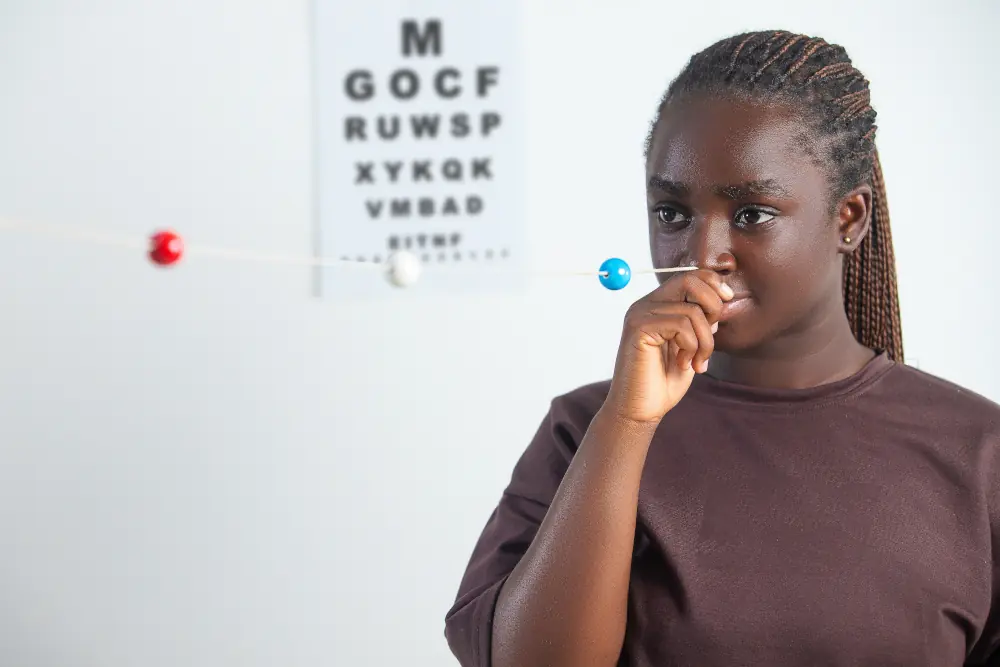
A car accident can leave behind more than whiplash and sore muscles. Even a low-speed collision can jolt the brain hard enough to disrupt how it processes what the eyes see, and this kind of injury rarely shows up on a standard eye chart. Synergy Health Partners sees this pattern often in patients who feel “off” after a crash but can’t quite explain why, and it’s one of the reasons neuro-optometry is part of a full recovery plan rather than an afterthought.
What Is Neuro-Optometry?
A routine eye exam checks whether you can see clearly. Neuro-optometry looks at how well your eyes and brain work together to track movement, judge distance, and stay focused without strain. After a car accident, that partnership can break down even when both eyes are structurally healthy, which is why patients are sometimes told their vision is “fine” while they’re still struggling to read a menu or drive comfortably.
How a Collision Affects the Visual System
You don’t need a direct hit to the head for this to happen. The rapid forward and backward motion of a car crash can cause the brain to shift briefly inside the skull, and the areas that control eye movement, focusing, and coordination between the two eyes are especially sensitive to that kind of jolt. In neuro-optemetry, this can show up as oculomotor dysfunction (trouble moving the eyes smoothly), accommodative dysfunction (trouble adjusting focus at different distances), or convergence insufficiency (trouble turning the eyes inward together to focus on something close). These are recognized categories of post-concussion and post-traumatic brain injury vision problems, not vague complaints, and they respond to targeted treatment.
Common Symptoms After a Car Accident
Visual symptoms after a car crash don’t always appear right away, and patients often connect them to stress or poor sleep before realizing they’re neurological. Watch for the following:
- Headaches that get worse with reading, screen time, or driving
- Blurred or double vision, especially by the end of the day
- Dizziness or lightheadedness that seems tied to visual tasks rather than movement alone
- New sensitivity to light, glare, or fluorescent lighting
- Trouble judging distances, curbs, or steps
- Eyes that tire quickly or feel like they’re working harder than usual
- Difficulty tracking a moving object, such as another car or a ball
Any one of these on its own could have another explanation. Several appearing together after a collision is worth mentioning to a provider, even if an ER visit or initial exam didn’t flag a concussion.
Getting an Accurate Diagnosis
A neuro-optometric evaluation goes well beyond checking visual acuity. It typically includes tests for how well your eyes team together, how smoothly they track a moving target, and how quickly you can shift and hold focus. This kind of exam is often done alongside a broader injury workup, since these symptoms frequently overlap with the neck and spine issues addressed through chiropractic care and the movement and balance work covered in physical therapy. Coordinating these evaluations matters, because treating the visual piece in isolation can miss a related musculoskeletal cause, and vice versa.
Treatment Options a Neuro-Optometrist May Recommend
Neuro-optometry treatments are built around the specific dysfunction found during the exam, not a one-size-fits-all program. Depending on your symptoms, a provider may suggest a combination of the following:
- Vision therapy exercises, done in office and reinforced at home, to retrain eye teaming and focusing
- Prism lenses to reduce double vision or ease the strain of convergence insufficiency
- Tinted or filtered lenses for light sensitivity
- Syntonic phototherapy, a light-based therapy some neuro-optometrists use to support visual processing
- A structured home exercise plan to keep progress moving between visits
These neuro-optometry approaches used after a car crash are meant to improve visual function and reduce symptoms over time, not offer an overnight fix, and most patients need a period of consistent therapy before noticing a real difference.
Why Timing Matters
Vision problems from a car accident don’t always resolve on their own, and waiting to address them can slow recovery in other areas too. Someone who feels dizzy or gets headaches from screen use may unconsciously limit activity or avoid physical therapy exercises that would otherwise help their recovery from the accident, which can stall progress across the board. Bringing up these neuro-optometry symptoms from a car crash early, even if they seem minor compared to neck or back pain, gives your care team a fuller picture of what’s actually going on.
Working With Synergy Health Partners After Your Accident
Recovering from a car accident usually isn’t a single-specialist job, and vision problems are a good example of why. A neuro-optometry evaluation works best as part of a coordinated plan alongside chiropractic care, physical therapy, and the rest of the disciplines involved in your recovery, so nothing gets treated in a vacuum.
If you’re dealing with dizziness, headaches, blurred vision, or balance issues after a crash, don’t assume it’s something you just have to wait out. Contact us to schedule an evaluation and find out what’s actually causing your symptoms.